Employers
Minimum Standards to Employ an Apprentice
Minimum requirements to employ an apprentice, including eligibility and compliance expectations.
Document coming soon.
Blue Card
Overview of the Blue Card system and employer responsibilities when working with young people.
Employment Contracts
When you take on an apprentice or trainee, you will have to sign both an employment contract and a training contract. They cover different aspects of your working relationship.
An employment contract sets out the terms and conditions of employment, including job title and description, place and hours of work, salary or wage, employment type, reporting relationships, leave entitlements and termination process.
View employment contract information
Training Contracts
A training contract outlines your obligations to provide training for the qualification that your apprentice or trainee plans to achieve.
- start or commencement date
- probationary period
- duration or nominal term of the training contract
- qualification details
- signatories including employer, apprentice or trainee, and parent or guardian
The training contract is also needed to determine eligibility for government incentives and allowances and to pay apprentice or trainee pay rates.
Read more about training contracts
Apprentice Connect Australia Provider
You can't start an apprenticeship or traineeship in Queensland without an Apprentice Connect Australia Provider.
As an employer of a Queensland apprentice or trainee, your provider is responsible for signing you up, creating the training contract and being your first point of call after registration.
Enquiries
Phone: 1800 210 210
Email: [email protected]
Managing and Supporting Your Apprentice
Help your apprentice get the most out of their apprenticeship by setting clear expectations, welcoming them into the team, providing feedback and supporting them as they develop their skills. Most apprentices and trainees start with limited work experience and may have different perspectives to you. The more support you provide them, the more value they can add to your business.
Business and Employer Responsibilities
Employers (even if you're self-employed) are legally responsible for the health and safety of workers, clients, visitors and volunteers in the workplace.
View employer responsibilities
Workplace Guidance
Guidance to manage workplace issues and maintain a safe working environment.
Mentally Healthy Workplaces Toolkit
Practical tools and resources to help employers, managers and leaders create and maintain mentally healthy workplaces.
View mentally healthy workplaces toolkit
Payday Super
From 1 July 2026, employers must pay employees’ super guarantee on payday at the same time as salary and wages.
Super guarantee is calculated as 12% of an employee's qualifying earnings and must be received by the super fund within 7 business days unless an extended timeframe applies.
Suitable Duties After Injury
Helping a worker return to work after injury can support recovery, maintain connection to the workplace and is an employer obligation under Queensland law. View employer guide on supporting workers with mental injuries.
National Code of Good Practice
The National Code is a good-practice tool that aims to help employers, apprentices and trainees understand workplace expectations and the rights and responsibilities in their Training Contract. Apprentice Connect Australia Providers can help employers, apprentices and trainees understand their roles and responsibilities, and determine other supports required at any stage.
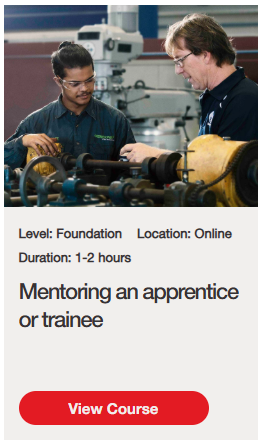
Mentoring an Apprentice or Trainee
This collection of micro-credentials is aimed to help support supervisors, apprentices and trainees in the workplace. The range includes topics on mentoring an apprentice and trainees, mentoring techniques and assessing the results of mentoring programs. These micro-credentials provide participants practical tips and guidance to prepare a safe work environment, implement a safe culture and techniques to assess the effectiveness of safety improvements.